
A Three-Minute Paper Pause Between Tasks
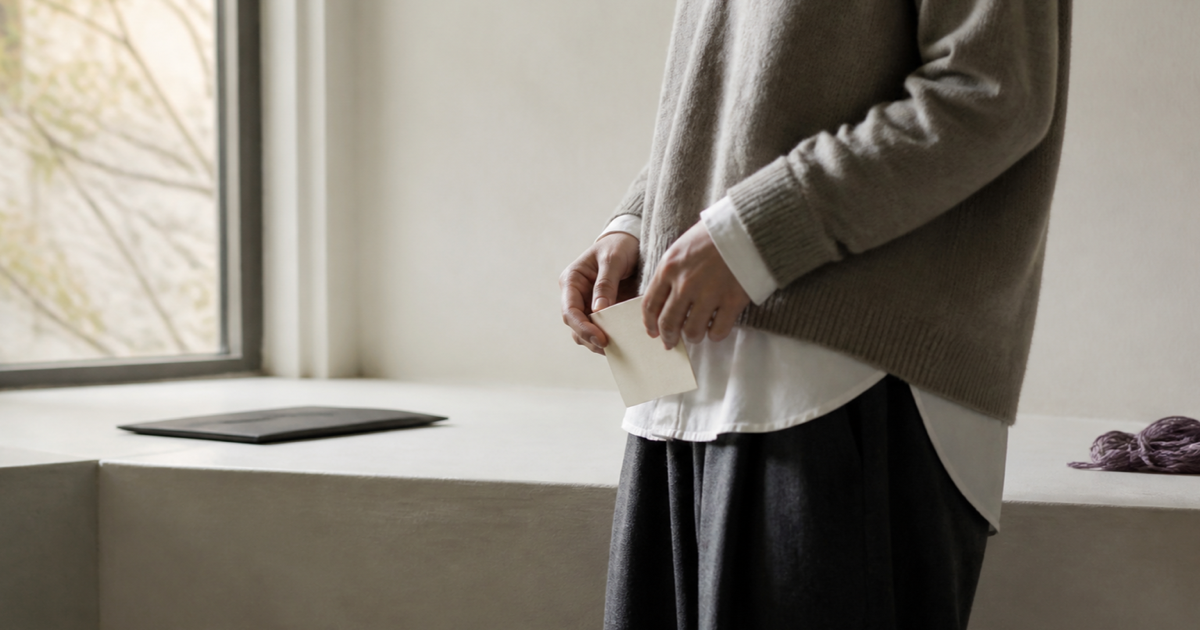
A small boundary between one kind of attention and the next.
The file is sent. The message is answered. A chair moves back from the table.
Then the next task begins almost at once.
The hands may already be opening a new folder while attention is still checking the old one. Was the attachment included? Which colour needed adjusting? What happens when the reply arrives?
Nothing is visibly wrong. Work continues. Yet part of the previous task has crossed the threshold with us.
Most days do not offer a clean hour between one kind of work and another. They offer a few minutes, sometimes less. A paper pause can give those minutes a shape.
The work leaves after we do
In a 2009 study of attention residue, Sophie Leroy used two experiments to examine what happens when people move from one task to another. Participants found it harder to give full attention to the new task when the previous one was unfinished. Some attention remained with the work they had left, and performance on the next task suffered.
The study does not mean every transition is harmful, or that one unfinished email will spoil the afternoon. Its tasks took place under experimental conditions. The useful part is narrower: ending an action and moving the hands does not always mean attention has moved too.
This is easy to recognise at the studio. A layout may be closed while the eye still measures its margins. Paper for a new sample is already on the table, but the last colour decision keeps returning. The tasks are separate. The mind has not drawn the same line between them.
A return point can quiet an unfinished task
Finishing everything before moving on is rarely possible. A better transition may begin by making the return visible.
Leroy and Theresa Glomb tested this in four studies published in 2018. When people expected to resume interrupted work under time pressure, they carried more attention residue into the interrupting task. A brief "ready-to-resume" plan, made by reflecting on where and how to return, reduced that residue and protected performance on the new task.
Earlier work by E. J. Masicampo and Roy Baumeister reached a related conclusion. Across several laboratory studies, specific plans for unfinished goals reduced intrusive thoughts and interference during unrelated activities. The plan mattered because it was concrete and intended for later use.
Neither study asks us to complete the old task before beginning the new one. The small act is to leave it somewhere findable.
A break is allowed to be small
A pause also has value when no planning happens inside it.
A 2022 systematic review and meta-analysis brought together 22 experimental studies of micro-breaks lasting ten minutes or less. Breaks had small, statistically significant effects on vigour and fatigue. The overall effect on performance was not statistically significant, and results varied by the kind of task and the length of the break.
That limit is important. A short pause may help the day feel less tiring. It does not guarantee sharper work, and the research does not name three minutes as an ideal duration. In the studies, breaks ranged from eight seconds to ten minutes and included different activities.
Three minutes is simply a length that can fit between ordinary tasks without needing a rearranged calendar. It is long enough for a small physical change. It is short enough to leave unmeasured.
The three-minute paper pause
The minutes do not need a timer. Their order matters more than their precision.
First minute: leave a return point
On a loose piece of paper, finish two lines:
Stopped at...
Return by...
The second line can hold a time, a condition or the next visible action: after the reply arrives, when the sample is dry, open the file and adjust the top margin. It should be specific enough that tomorrow's hands know where to begin.
If the work has more moving parts than a loose card can hold, the Printable Project Tracker Insert keeps tasks, priority decisions and progress together in one small spread. The pause remains the same: mark the exact place where the project can be found again.
Second minute: hold no task
Turn the card face down. Stand, if the body wants to stand. Look towards a window or wash a cup. Let this minute stay empty of input.
Opening a feed or checking another inbox fills the space with a third task. The point here is not perfect calm. It is a brief interval in which the previous work is no longer asking and the next work has not begun.
Third minute: meet the next task
Turn to a fresh edge of paper and write only the first physical action.
Not "work on the article," but "read the last paragraph." Not "prepare the order," but "place the two files side by side." The line does not need to contain the whole plan. It only needs to make the beginning visible.
Then the paper can move to the side. The next task has already been met in its smallest form.
Why paper can make a useful edge
The same return plan could be typed. Paper is not a cognitive cure, and the studies did not compare this three-minute practice with an app.
Its advantage here is ordinary and physical. A card can be turned over. It stays outside the stream of messages. The pencil stops moving, and the gesture has an end.
At the studio, that edge is often enough. One side of the card belongs to the task that has paused. The blank side belongs to the small distance before the next one. Paper gives the transition somewhere to happen.
On hurried days, even three minutes may not fit. One return line can still keep an unfinished task from becoming a vague shape carried through the afternoon. The rest of the pause can return another day.
We do not need to finish one part of life before touching the next. We only need a place to leave it, and a little time to arrive elsewhere.